
Online Session - Board Members
The Art of Good Leadership - Insights for High-Performance Board Members
WHU - Otto Beisheim School of Management and IESE Business School invited you to gain insights on "The Art of Good Leadership". Thank you for your participation.
Dr. Karl-Ludwig Kley, Chairman of the Supervisory Board at E.ON SE, and Thomas de Maizière are among the most influential decision-makers in German business and politics. Now they have co-authored a non-fiction book that has found its way onto the Spiegel bestseller list as well as other rankings. They summarize their experiences in 10 golden rules of good leadership:
1. GOOD LEADERS LIKE PEOPLE
We believe that leaders must have a genuine interest in
other people, in their thoughts and feelings; they must
approach others with empathy; they have faith in people’s
good side without being naïve or gullible; they must be
willing to trust people rather than treating them with
suspicion or distrust.
2. GOOD LEADERSHIP REQUIRES INTEGRITY AND
RESPECT
Integrity and respect imply responsibility and loyalty.
Leaders who display both will gain trust, but they will also
find it easier to place their trust in others. Good leaders
know that leadership means serving their own institution
and that this takes precedence over their own interests.
However, integrity and respect should not be overdone:
morality alone does not suffice for leadership.
3. GOOD LEADERS EXERCISE POWER RESPONSIBLY
Leadership goes hand in hand with the power to change
things and to shape developments. Authority grows from
the evident will to exercise this power. There is no place for
a guilty conscience. Humility and a sense of responsibility
protect leaders from abusing their power.
4. GOOD LEADERSHIP MEANS SELF-LEADERSHIP
Leaders must be able to reflect upon themselves and to see
themselves through the eyes of others. This includes the
ability to listen. Leaders must keep both feet on the ground,
they must not get carried away and they must be open to
change. Self-leadership means always wanting to improve.
Our ten golden rules of good leadership
5. GOOD LEADERS TRANSLATE AMBITIONS INTO
REALITY
Leaders must know where the journey is heading. This
includes an ambitious vision and strategic clarity. Even the
finest vision and the best strategy are of no use, however, if
they are not implemented. Leadership therefore requires a
sense of reality. Leaders must deliver results.
6. GOOD LEADERSHIP MEANS CHANGING THE STATUS
QUO
Good leadership requires curiosity and a readiness to learn;
it requires the ability to question the status quo and initiate
something new. Good leadership means taking decisions in
the absence of certainty, pushing at boundaries and
overcoming resistance. Leadership requires courage and the
willingness to take risks.
7. GOOD LEADERSHIP OVERCOMES CRISES
Leaders must realise that crises will regularly occur. Good
leadership therefore also means preparing for crises. A
crisis calls for focus and decision-making. Crises are times
for taking decisive action; they are not times for lengthy
debate about who is in charge.
8. TO BE A GOOD LEADER, YOU MUST COMMUNICATE
Good leadership means convincing people, institutions or
society about the way forward. This can only be achieved
by communicating and addressing people personally.
People want their leaders to speak to them, even in the
digital age. They want to hear from figures they can trust
who are authentic and reliable.
9. GOOD LEADERS THINK AND ACT BEYOND THEIR
OWN TENURE
Good leaders realise that they will have to pass on the
baton; that their actions need to secure the institution’s
future and success in the long term, and not only during
Our ten golden rules of good leadership
their tenure; that their performance will partly be assessed
in terms of their contribution to creating the next
generation’s space to shape the future.
10. GOOD LEADERS DO NOT LET THEMSELVES BE
SWALLOWED UP BY THEIR PROFESSIONAL LIVES
Good leaders realise that they can be replaced at anytime.
They retain a detached view of themselves and others. They
are aware that their own energy reserves are finite. To live
up to their responsibility as leaders, they put their mind and
body to well-considered use. Leadership needs a private
life; private life strengthens leadership. Devoting mental
energy to other things helps leaders to concentrate on their
leadership role.
Thanks to Dr. Karl-Ludwig Kley for sharing his experiences on leadership and for the great Q&A Session.
In cooperation with:

April 21, 2021
19:00h-20:30h
- 19:00h - Welcome & Program Introduction
- Professor Dr. Markus Rudolf, Dean WHU - Otto Beisheim School of Management
- 19:15h - Key note: The Art of Good Leadership
- Dr. Karl-Ludwig Kley, Chairman of the Supervisory Board at E.ON SE
- 20:00h - Q&A Session
This session is related to the High-Performance Board Member-Program that WHU and IESE created together and that aims at a better understanding of the workings, responsibilities, and dynamics of a corporate board. And strives, among other objectives, to enhance your core competencies to forge strategic partnerships between the board and senior management. Check out our website here.
This session is related to the High-Performance Board Member-Program that WHU and IESE created together and that aims at a better understanding of the workings, responsibilities, and dynamics of a corporate board. And strives, among other objectives, to enhance your core competencies to forge strategic partnerships between the board and senior management. Check out our website here.
Join us on Wednesday, April 21, 2021 for this exciting online session.
Registration for this event has closed.
Your hosts:
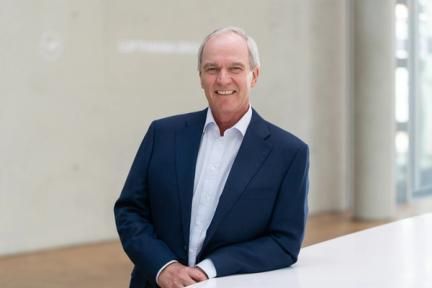
Dr. Karl-Ludwig Kley, Chairman of the Supervisory Board at E.ON SE
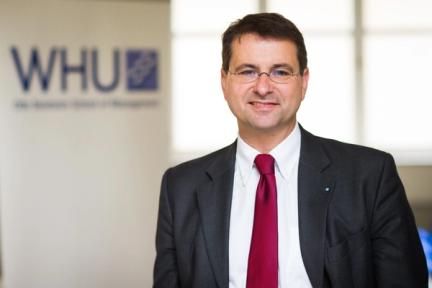
Professor Dr. Markus Rudolf, Dean WHU - Otto Beisheim School of Management